Why Pogostemon Helferi Melts Back After Planting (And How to Fix It)
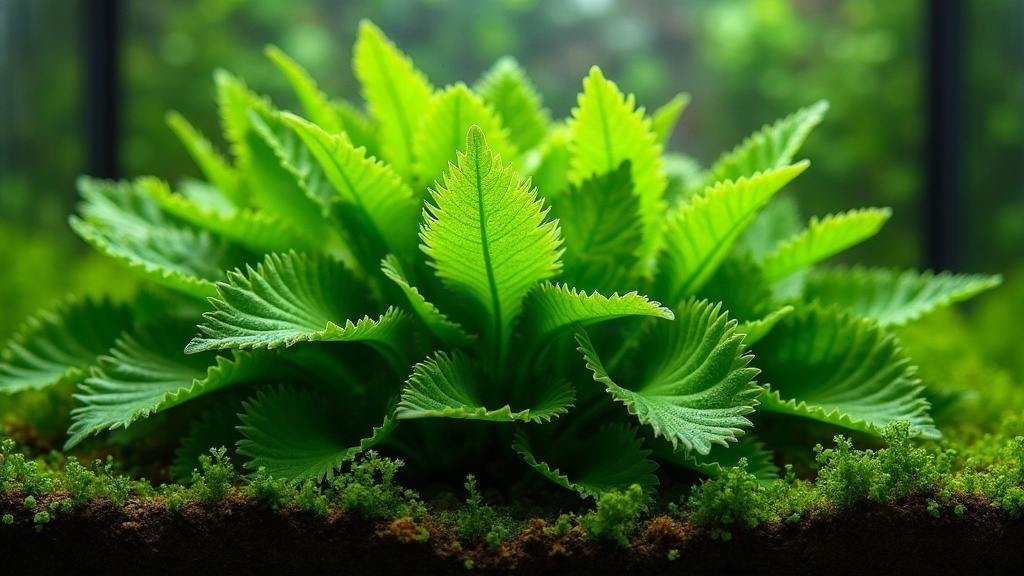
If your Pogostemon Helferi (also sold under the name “Downoi”) has started turning yellow, going mushy, or dropping leaves right after you planted it, don’t panic. What you’re seeing is transplant melt, a normal physiological reaction that happens when leaves grown above water simply can’t function once they’re submerged. Below I’ll walk through why this happens, how long you should expect it to last, and what actually helps the plant bounce back instead of rotting away.
What Is “Melt” and Why Does It Happen?
Here’s the thing most beginners don’t realize: nearly all the Pogostemon Helferi sold in shops is grown emersed, meaning above water in humid greenhouse trays, because it’s simply faster and cheaper for nurseries to propagate that way. The problem is that emersed leaves are built differently from the submersed leaves you actually want in your tank:
- A thicker waxy cuticle that stops the leaf from drying out in open air
- Fewer stomata, and the ones it has are tuned for underwater gas exchange, not air
- Tissue chemistry geared toward atmospheric CO2 rather than the dissolved CO2 found in water
So when you drop that plant into your aquarium, those leaves are, in a sense, the wrong tool for the job. They can’t photosynthesize properly or exchange gases underwater in their current form. The plant’s response is to shed them and grow a fresh batch of submersed-type leaves instead, and that shedding is exactly what you’re watching when you see yellowing, browning, or that soft, melting texture.
Is Melting Always Bad?
Not at all. Partial melt is actually expected, almost a rite of passage for this species. What really matters is whether the roots and rhizome (the crown) stay alive underneath all that drama. If the base remains firm and keeps its white or cream color (not black, not slimy), you can expect fresh, healthier submersed leaves to appear within roughly 2 to 4 weeks.
Signs you’re looking at normal transition melt:
- Yellowing that starts at the tips or edges of leaves
- Leaves going translucent or turning soft
- Older, lower leaves dying off while new growth pokes up from the center
Signs that you’re dealing with actual death, not melt:
- The entire crown turns black or brown and starts falling apart
- A foul, rotten smell coming from the base
- Zero new growth after 4 to 6 weeks
Factors That Make Melting Worse
A few conditions can turn what should be routine adjustment melt into something that actually kills the plant.
1. Unstable Water Parameters
Swings in temperature, pH, or hardness pile extra stress on top of transplant shock, which is already taxing the plant. Try to keep everything steady for the first couple of weeks after planting.
2. Low Light or Inconsistent Lighting
This plant needs moderate to high light to push through melt and regrow quickly. Skimp on light and recovery drags on, plus dying leaf tissue becomes an easy target for algae.
3. Insufficient CO2
Pogostemon Helferi responds really well to CO2 injection. Without enough of it, recovery slows down, and there’s a real chance the melted tissue starts rotting before new growth has a chance to take over.
4. Planting Too Deep
Bury the crown under the substrate and you essentially suffocate the growth point. Only the roots belong underground; the crown itself should sit right at, or just slightly above, the substrate surface.
5. Poor Water Flow
Dead spots with little circulation let biofilm build up around freshly planted, melt-prone stems, and that rot can spread into tissue that was otherwise healthy.
How to Help Pogostemon Helferi Recover Faster
- Trim dying leaves as soon as you spot them. Cutting away mushy or melted tissue stops rot from spreading and keeps your bioload in check.
- Resist the urge to uproot it and inspect the roots. Every time you disturb the rhizome, you basically reset the clock on its adjustment.
- Get CO2 and lighting dialed in from day one. Don’t wait until melt is already underway to fix your setup; stable, moderate-to-high light and consistent CO2 should be in place before you even plant it.
- Dose liquid fertilizer, particularly potassium and micronutrients, to give new leaves what they need to form properly.
- Give it time. Full recovery with visible new growth usually takes 3 to 6 weeks, and it can stretch longer in low-tech, non-CO2 tanks.
- Leave it where you put it. This plant does not appreciate being dug up and replanted over and over.
When to Worry
If 6 to 8 weeks have passed with no sign of new growth and the crown has gone soft or discolored, it’s safe to assume the plant has died. Pull it out before it fouls your water. Next time around, consider sourcing a tissue-cultured (in-vitro) Pogostemon Helferi instead; since it’s grown submersed from the start, it experiences little to no melt at all.
Conclusion
Melt right after planting is a normal, expected stage for emersed-grown Pogostemon Helferi, not a verdict on whether you’ve failed. As long as the rhizome stays healthy underneath, stable water conditions, good light, and adequate CO2 will carry the plant through this rough patch and into strong, lush submersed growth. Patience, and leaving the plant alone once it’s placed, are really what make or break your success with this carpeting favorite.