Spring Diatom Bloom Control in a Recently Rescaped Low-Tech Tank
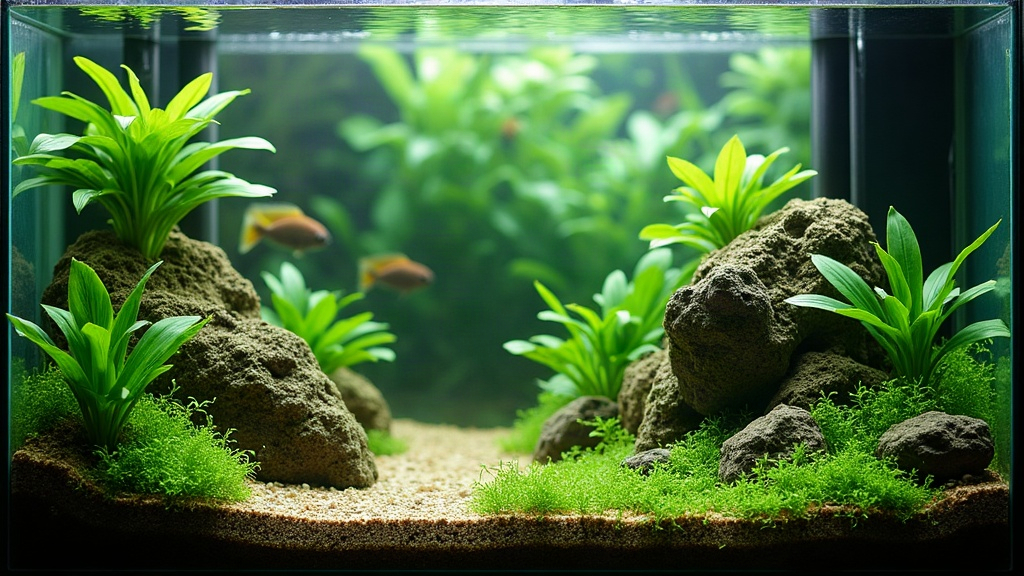
That brownish, dusty film showing up on your glass, substrate, and plant leaves a few weeks after a rescape? Nine times out of ten, that’s a diatom bloom. It’s a natural, temporary phase driven by silica and leftover nutrients in a tank that’s still finding its feet. Nothing to panic about. Once you know what’s feeding it, you can speed up the exit.
Why Diatoms Explode After a Rescape
Diatoms are single-celled algae with cell walls built from silica, and they love a fresh rescape for a few reasons:
- Silica leaching out of new substrate, sand, crushed coral, or even your tap water depending on where you live
- Excess nutrients (ammonia, nitrite, phosphate) coming from a biofilter that hasn’t caught up yet
- Almost no competition — a freshly rescaped tank has no established plant mass or biofilm to crowd them out
- Springtime light shifts — longer days and warmer rooms often push more incidental light onto the tank, even if you haven’t touched your fixture’s timer
In a low-tech setup without CO2 injection, plants simply grow at a slower pace. They can’t soak up a nutrient spike the way a high-tech, heavily planted tank could. That lag, right there, is the window diatoms slip through.
Is It Diatoms or Something Else?
Worth checking before you start treating for the wrong thing:
- Color: brown to golden-brown, sometimes with a faint metallic sheen
- Texture: dusty, wipes away with a finger or cloth (nothing like the stubborn crust of green spot algae)
- Location: shows up first on glass, substrate surface, and older or slower-growing leaves
- Smell: mild and earthy, not the sharp, swampy odor of cyanobacteria
If what you’re looking at is slimy and peels off in sheets rather than wiping off as dust, that’s cyanobacteria. Different problem, different fix.
Step-by-Step Control Plan
1. Let the Nitrogen Cycle Finish
Diatoms are basically a signal flare for an immature filter. Test for ammonia and nitrite. Hold off on new fish or heavier feeding until both readings sit at zero consistently, not just once.
2. Increase Water Changes Temporarily
For the first 3-4 weeks after the rescape, do 30-40% water changes twice a week. This dilutes silica and nutrient load without starving the tank of everything it needs.
3. Manual Removal
- Wipe the glass with a clean algae pad every 2-3 days
- Siphon loose diatoms off the substrate whenever you do a water change
- Rub coated leaves gently between your fingers, underwater, no scrubbing hard enough to tear the tissue
4. Add Diatom-Eating Cleanup Crew
- Otocinclus catfish: peaceful, effective grazers, good for tanks 10 gallons and up
- Nerite snails: relentless cleaners of glass and hardscape
- Amano shrimp: handle general biofilm and diatoms without bothering plants
Wait until ammonia and nitrite both read zero before adding any of these.
5. Check Your Light Schedule
Trim your lighting down to 6-7 hours a day while the bloom runs its course. Watch for direct sunlight hitting the tank too, which sneaks up in spring as the sun’s angle changes. Move the tank or hang a curtain if that’s the issue.
6. Boost Fast-Growing Plants
Floating plants like frogbit or salvinia, plus fast stems like hornwort or pearlweed, pull nutrients out of the water column quickly. That starves the diatoms of food and shades out some of the extra light at the same time.
What NOT to Do
- Don’t tear the substrate apart in a panic. That just restarts the whole nutrient spike from scratch
- Don’t reach for algaecides. They stress out fish and shrimp and do nothing about the actual cause
- Don’t kill all the light either. Plants need it to eventually out-compete the algae for good
How Long Does It Take to Clear?
In most newly rescaped low-tech tanks, the bloom clears up in 3 to 6 weeks, right around when the biofilter matures and plants start putting down real roots. If it’s still going strong past 8 weeks, retest your parameters. Lingering ammonia, or high silicate/phosphate coming in through your tap water, is often the real culprit at that point, and it might be time to look at a water softener or an RO/DI mix.
Conclusion
A spring diatom bloom in a recently rescaped low-tech tank is predictable and temporary, tied to silica release, a biofilter still catching up, and plants that haven’t had time to compete yet. It’s not a sign you did something wrong. Stick with regular water changes, manual wipe-downs, a trimmed light schedule, and a cleanup crew that actually eats the stuff, and the tank should settle into clear, stable water within a month or so.