Keeping Bumblebee Gobies in a Brackish Mangrove Paludarium
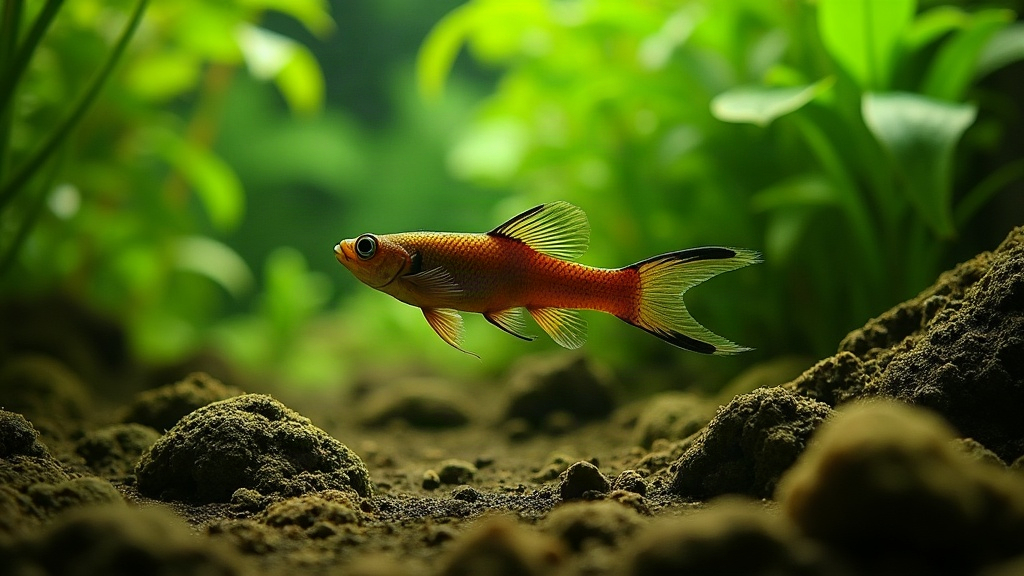
Why Bumblebee Gobies Need Brackish Water
Bumblebee gobies (Brachygobius spp.) are small, striped, and genuinely fun to watch once you get their tank right. In the wild they live in tidal creeks, mangrove swamps, and river mouths where fresh water and seawater mix constantly. Pet shops love to label them “freshwater fish,” which is honestly a bit misleading. Keep one in a plain freshwater tank and you’ll usually see a fish that fades, hides, and dies within a few months. Keep it at a specific gravity of 1.005–1.010, and you get a completely different animal: bolder, more colorful, and noticeably longer-lived.
How do you know you’ve got it right? Watch the behavior:
- They perch confidently on roots and leaf litter instead of hiding
- The yellow-and-black bands look sharp, almost glowing
- They feed actively several times a day, not just once in the evening
- They only duck away during digestion or the occasional territorial spat
Designing the Mangrove Paludarium
A paludarium, essentially a tank that blends land and water, should mimic that in-between zone where mangrove roots meet brackish water. This isn’t just an aesthetic choice. It’s the actual habitat these fish evolved in.
Tank Size and Layout
- Minimum footprint: A 20 to 29 gallon long-style tank works well. Bumblebee gobies aren’t swimmers in the traditional sense; they perch and defend a spot, so horizontal space matters more than depth.
- Water depth: 4 to 8 inches is all you need. These are bottom-dwellers through and through.
- Land/root area: Give 30 to 40% of the tank over to emergent roots, mangrove propagules, or a sloped substrate that rises toward a dry section.
Substrate and Hardscape
- Fine aragonite or coral sand is worth using. It buffers pH and slowly releases minerals as it dissolves.
- Blend in some fine river sand too. It darkens the substrate naturally and makes the gobies’ colors pop in contrast.
- For hardscape, spider wood, mangrove root replicas, or even real red mangrove (Rhizophora mangle) cuttings rooted in the substrate all work. Real mangroves actually tolerate brackish roots just fine and give you authentic hiding spots, not plastic-looking fakes.
Water Parameters
| Parameter | Target Range |
|---|---|
| Specific gravity | 1.005–1.010 |
| Temperature | 76–82°F (24–28°C) |
| pH | 7.5–8.5 |
| GH | Moderate to hard |
| Ammonia/Nitrite | 0 ppm |
Mix a proper marine salt mix (never aquarium “tonic” salt, that’s a different product entirely) into dechlorinated fresh water until you hit the target SG. Then check it with a calibrated hydrometer or refractometer every single time. Eyeballing salinity is probably the number one mistake new keepers make, and it’s an easy one to avoid.
Filtration and Flow
These fish evolved in calm backwaters tucked among roots, so strong current stresses them out fast. A sponge filter does the job nicely, or a canister filter with the output run through a spray bar or baffled against the glass. You want gentle surface movement, just enough for gas exchange. Skip powerheads or anything that creates a visible current sweeping across the substrate.
Feeding Bumblebee Gobies
Here’s something most new owners learn the hard way: these gobies will often starve rather than eat flake food. They want live or frozen food that moves:
- Baby brine shrimp (the best staple, hands down)
- Daphnia
- Finely chopped bloodworms
- Microworms, useful for smaller individuals
Their stomachs are tiny and they don’t carry much in the way of fat reserves, so feed small portions 2 to 3 times a day rather than one big meal. If a fish seems shy at feeding time, target-feed with a pipette, dropping food right at its perching spot. It makes a real difference.
Tank Mates
Stick to species that handle the same brackish conditions:
- Molly varieties (Poecilia spp.)
- Orange chromide cichlids (Etroplus maculatus), better suited to larger setups
- Nerite snails, which handle mild brackish water well and keep algae down
- Steer clear of fast, pushy fish that will out-compete gobies at every meal
Common Problems and Fixes
- Fading color or lethargy: Check your salinity first. Nine times out of ten, it’s too low.
- Refusing food: Switch to live food. Most bumblebee gobies simply won’t touch pellets.
- Bullying between gobies: Add more roots and perching spots to break up sightlines and reduce territory fights.
- Algae building up on mangrove roots: Totally normal in a brackish setup. A few nerite snails will keep it under control.
Conclusion
Build the brackish mangrove paludarium right, and bumblebee gobies stop being the short-lived novelty fish everyone warns you about. They become a genuinely thriving, naturalistic display. The fundamentals come down to four things: steady brackish salinity, gentle water flow, plenty of root structure, and a feeding routine built around live food. Nail those, and these little gobies will keep perching, flashing color, and holding their ground at the water’s edge for years.