Floating Island Paludarium for Vampire Crabs with Moss
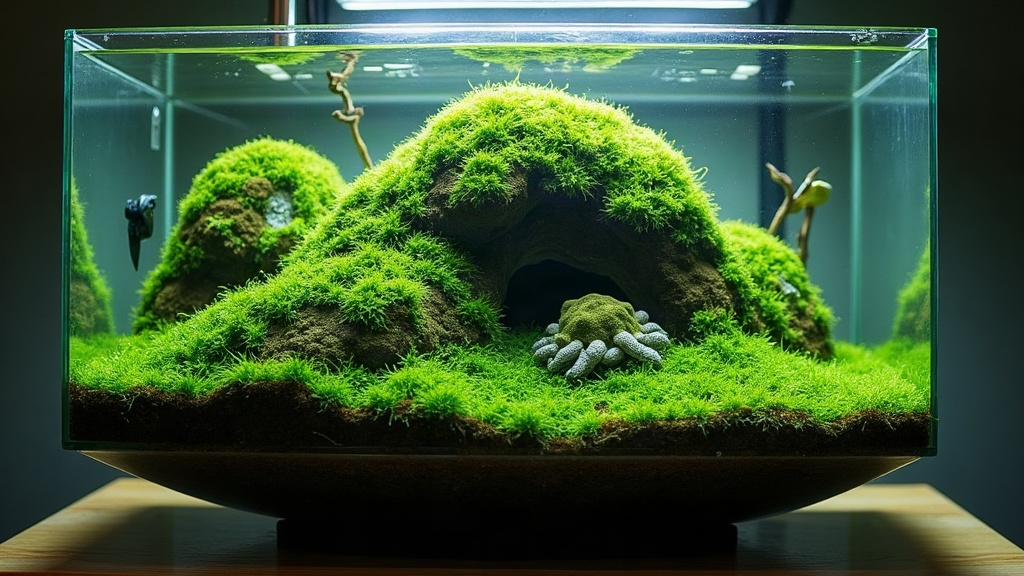
Building a Floating Island Paludarium for Vampire Crabs With Moss
A floating island paludarium pairs a stable land-and-water setup with the kind of lush greenery vampire crabs would actually encounter back in their native swampy forests. It’s not just decoration, either. This design solves the single biggest headache in keeping these crabs: giving them land and shallow water at the same time, without flooding the tank or risking a drowned crab.
Why Vampire Crabs Need a Paludarium, Not Just an Aquarium
Vampire crabs (Geosesarma spp.) aren’t aquatic in the way you’d expect. They’re semi-terrestrial, and in the wild they cling to stream banks, burrow into leaf litter, and shelter among mossy rocks near slow water. Their gills are modified for this exact lifestyle, which means they need constant humidity but can’t stay submerged for long. Drop one in a full aquarium and it’ll eventually drown. Keep it in a bone-dry terrarium and it’ll dehydrate just as surely. The paludarium splits the difference, part land, part water, and a floating moss island is honestly the cleanest way to blend the two.
What You’ll Need
- A tank of at least 10-20 gallons (40-75 L), wider than it is tall
- Aquarium-safe foam (XPS/Styrofoam) or cork bark for the floating base
- Java moss, Christmas moss, or flame moss (live mosses that tolerate wet conditions)
- Fishing line or cotton thread to tie moss down
- Dechlorinated water, kept shallow (2-4 inches / 5-10 cm)
- Leaf litter (Indian almond/Catappa leaves) and driftwood
- A reptile-safe background or cork bark wall for climbing
- A tight-fitting, ventilated lid (these crabs are genuine escape artists)
Step-by-Step Build
1. Shape the Floating Base
Cut your foam into something irregular, not a perfect circle, which reads as fake the moment you glance at the tank. Round off the edges with a utility knife or sandpaper so crabs can actually haul themselves out without clawing at a sharp lip. A thickness of 1.5-2 inches (4-5 cm) gives enough buoyancy to carry a moss layer plus a few small crabs without the whole thing dipping underwater.
2. Attach the Moss
Tie small clumps of Java moss or Christmas moss onto the foam with cotton thread or fine fishing line, spacing them roughly an inch apart. Give it three to four weeks and the rhizoids will have gripped the foam on their own, at which point the ties become redundant. Want a denser mat faster? Bind the moss to coconut fiber mesh first, then glue that mesh onto the foam using aquarium-safe silicone.
3. Add Texture and Grip Points
Glue on a few chunks of cork bark or driftwood so crabs have somewhere to climb and, just as important, somewhere to hide. Vampire crabs are skittish by nature. Skip the cover and they’ll spend their days tucked out of sight, which rather defeats the point of building a display tank in the first place.
4. Set Up the Water Zone
Fill the tank base with shallow, dechlorinated water, keeping it below shoulder height for a standing crab, roughly 2-4 inches works for most adults. A gentle sponge filter keeps the water from going stagnant without creating currents strong enough to pull a small crab under; skip the powerheads and canister filters here.
5. Position the Island
Let the island float so it just touches the glass or rests lightly against a piece of driftwood, enough to stop it drifting toward a filter intake. Leave plenty of open water around it too, since crabs like to wade and forage at the edges.
Humidity, Lighting, and Temperature
- Humidity: 80-90%, kept up with daily misting or an automatic fogger
- Temperature: 72-78°F (22-26°C); anything past 82°F (28°C) is pushing it
- Lighting: Low-to-moderate LED for 6-8 hours a day, enough to keep moss growing without baking the tank
Common Mistakes to Avoid
- Using non-aquatic moss, like sheet moss or reindeer moss, both of which turn to mush underwater
- Making the water too deep, since a crab that can’t easily reach air can drown
- Skipping the lid, because these crabs scale glass and squeeze through gaps you’d swear were too small
- Loading the island with crabs before the moss has rooted, which tends to sink the whole thing
Maintenance Tips
Trim the moss every two to three weeks so it doesn’t choke off the climbing paths. A weekly 20% water change keeps things fresh, and any uneaten food should come out within 24 hours, otherwise ammonia builds up fast in such a small volume of water. Check the foam itself every so often, too. After enough months submerged, it can waterlog and lose buoyancy, so it’s worth keeping a spare island cut and ready to swap in.
Conclusion
A floating moss island gives vampire crabs the humid, part-land-part-water setup they actually need, and it happens to look great doing it. Get the foam base right, stick to aquatic moss species, and keep an eye on water depth and humidity, and you’ve got a build that’s forgiving for beginners but keeps evolving as the moss fills in and the colony settles.