Inline Heater vs Submersible Heater for a Sump-Based Planted Tank
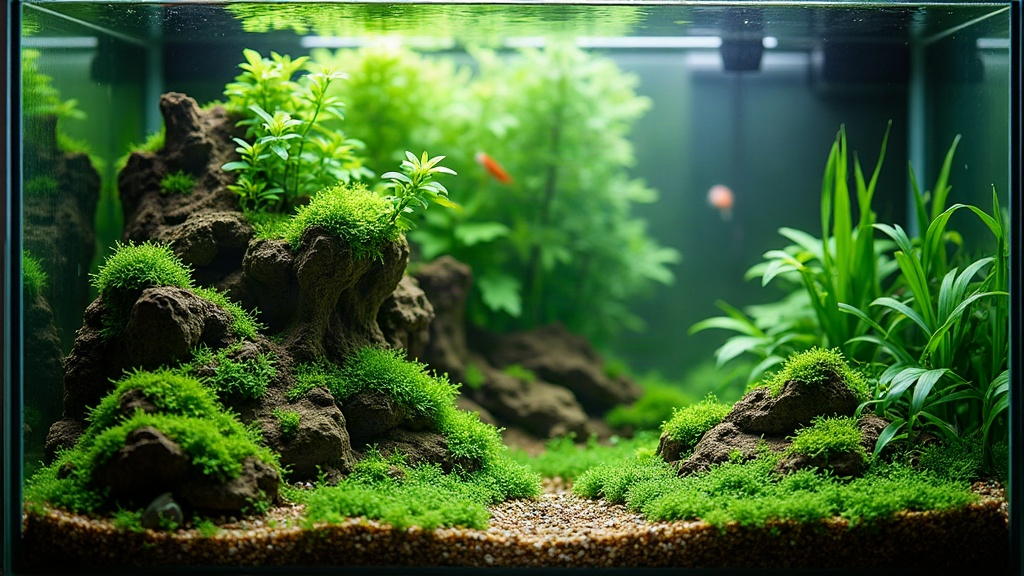
If you’re running a sump-based planted tank, the heating question eventually comes down to this: inline heater vs submersible heater. The short version? Inline usually wins on looks, safety, and even heat distribution. Submersible wins on price and sheer simplicity. Which one actually makes sense for you depends on your plumbing setup, how densely you’ve planted the tank, and honestly, how much you care about keeping the display free of visible gear.
Why Heater Choice Matters More in Planted Tanks
Planted tanks live and die by their visuals. Every piece of hardware you add is competing for attention against your hardscape and foliage, whether you like it or not. Temperature stability matters more here too, because plants like Rotala, Hemianthus, and Bucephalandra don’t handle swings well. A couple degrees of fluctuation and you’ll see melt, stalled growth, or leaves that just never look right. A sump gives you a built-in place to tuck equipment out of sight. The real question is which heater type makes better use of that hidden space.
Submersible Heaters: The Familiar Choice
Submersible heaters go straight into the water, either in the display tank itself or somewhere in a sump chamber.
Pros:
- Cheaper upfront. A solid 150-300W unit (Eheim Jager, Fluval E-series) runs you $25 to $60.
- Dead simple to install. No cutting pipe, no extra fittings to source.
- Swapping or upgrading later doesn’t mean touching your plumbing at all.
Cons:
- Drop one in the display tank and it sticks out among the plants and rockwork, no way around it.
- Put it in the sump instead, and it needs steady water flow through that chamber. Otherwise it cycles on and off unpredictably, or worse, overheats in a dead-flow pocket.
- Glass models are genuinely fragile. One bump against a rock and you’re cleaning up a mess.
Most aquascapers who go this route end up hiding the heater behind a bubble wall divider in a dedicated sump compartment. It works fine, but now you’ve got another chamber to account for in your baffle layout.
Inline Heaters: The Discreet, Flow-Based Option
Inline heaters (think Hydor ETH or Eheim Jager Inline) mount right into the plumbing, usually on the return line heading back from the sump to the display.
Pros:
- Zero visibility in the tank. If you’re building a competition-style or minimalist scape, this is huge.
- Water gets heated as it moves through, so temperature stays more even across the whole system rather than pooling warm in one spot.
- No glass tube sitting in the tank means one less thing to accidentally knock during trimming or maintenance.
- Your sump baffle design stays simpler since there’s no need to carve out a heater chamber.
Cons:
- Pricier, usually $50 to $100 or more, and you’ll likely need barbed fittings or hose clamps on top of that.
- Needs decent flow to work properly, typically 65-260 GPH minimum. If you’re running a gentle, CO2-friendly flow rate, you might fall short of that threshold.
- If the pump fails and the unit runs dry, the heating element can get damaged, and in rare cases that’s a genuine safety concern.
- Installing one means cutting into your return line. Not something you want to redo every few months if you change your mind.
Head-to-Head Comparison
| Factor | Submersible | Inline |
|---|---|---|
| Visibility in display tank | Can be hidden in sump | Always hidden |
| Cost | Lower | Higher |
| Installation | Plug and drop in | Requires plumbing work |
| Heat distribution | Localized unless flow is strong | Even, flow-driven |
| Flow rate requirement | None | Minimum GPH needed |
| Risk if pump fails | Minimal | Can run dry and fail |
| Best for | Budget builds, smaller sumps | High-flow, aesthetics-focused setups |
Which One Fits Your Sump Setup?
- Go submersible if: your sump is tight on space, your budget is tight too, or you just want something you can pull out and swap without touching a single fitting.
- Go inline if: your return pump pushes well above the minimum flow spec, you want an entirely clutter-free display, and you don’t mind a bit of plumbing work (or have room for the extra parts).
There’s also a middle path. A lot of hobbyists keep a submersible heater sitting in the sump’s return chamber (after filtration, before the pump) even once they’ve installed an inline unit. Think of it as insurance. If the main pump ever quits, you’re not left without heat.
Practical Tips for Planted Tank Heating
- Size your heater for the entire system volume (display, sump, and all the plumbing in between), not just what’s visible in the tank.
- Keep a separate digital thermometer in the display tank. Sump temps often lag a degree or two behind what’s actually happening where your plants live.
- Pair whatever heater you pick with a solid external controller, something like an Inkbird ITC-308. The control is noticeably tighter than most built-in thermostats, which matters a lot for touchier plant species.
- Before buying an inline unit, check your return pump’s actual flow rate against the heater’s minimum spec. This one step gets skipped more than anything else, and it’s the single most common reason people end up with an inline heater that doesn’t work right.
Conclusion
Either option will keep a sump-based planted tank sitting at a stable, plant-friendly temperature, that part isn’t really in question. Submersible heaters are the practical pick, especially if you’re running a smaller system or watching your budget. Inline heaters are more of a premium move, worth it if you want a spotless display and you’ve got the flow rate and plumbing to back it up. Prioritize looks and even heat? Go inline. Care more about cost and keeping things simple? Stick with submersible. Or, if you want the best of both, run one of each and call it redundancy.