Inline CO2 Diffuser vs In-Tank Ceramic Diffuser for 90-Gal Tanks
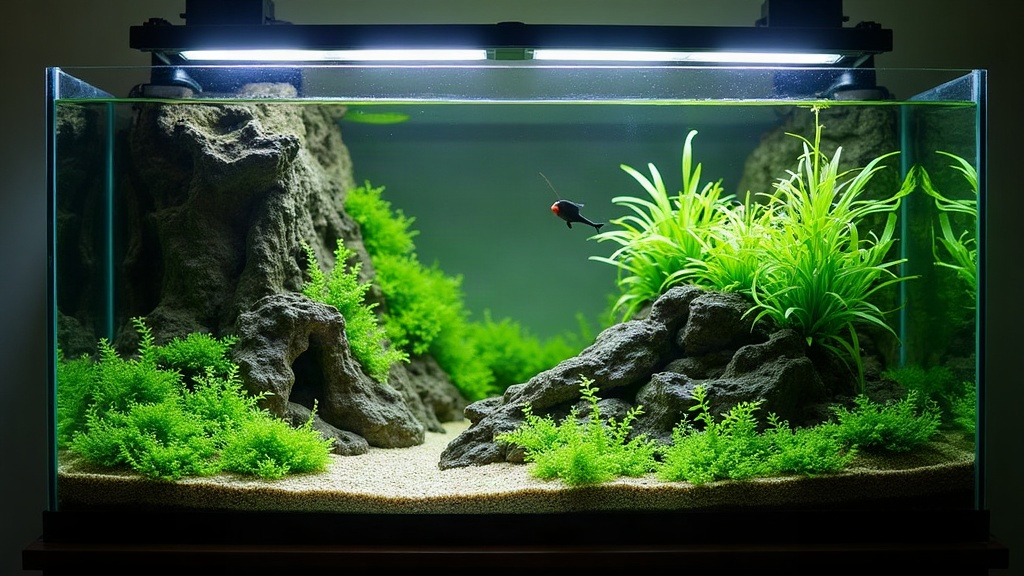
If you’re running a 90-gallon high-tech planted tank, deciding between an inline CO2 diffuser (mounted in your canister filter’s return line) and an in-tank ceramic diffuser (that glass or ceramic disc bubbling away inside the aquarium) is one of the bigger equipment calls you’ll face. Short answer: at this tank size, inline almost always wins on saturation and consistency, with a lot less daily fiddling involved. That said, ceramic diffusers still earn their keep in smaller tanks, tighter budgets, or as a backup system.
Why Tank Size Matters Here
At 90 gallons, sheer water volume works against you. CO2 needs to dissolve and spread evenly through a large body of water before your plants can actually use it, and before it simply bubbles away at the surface. A method that performs perfectly in a 20-gallon nano can leave the back corners of a 90-gallon tank gasping for CO2, and that’s exactly where you’ll see algae take hold and growth stall out in the low-flow zones.
How Each Diffuser Works
In-tank ceramic diffuser
- Sits inside the aquarium, usually near the substrate or somewhere mid-water.
- CO2 pushes through a fine ceramic membrane, producing a fog of tiny bubbles.
- Those bubbles dissolve as they rise, but plenty escape to the surface before finishing the job, especially in a tank that’s tall or wide.
Inline CO2 diffuser
- Installed right in the canister filter’s outflow tubing, outside the tank itself.
- CO2 gas gets injected into the moving water under pressure, inside the filter housing or tubing, where turbulence does the mixing.
- The filter’s pump forces water and gas together through baffles or a small reactor chamber, so by the time water re-enters the tank, dissolution is already close to complete.
Head-to-Head Comparison
CO2 Dissolution Efficiency
Inline wins here, no contest, for a tank this size. Because gas mixes under pressure with strong flow in an enclosed space, dissolution often hits 90-95%. Ceramic diffusers, even the well-made ones, tend to lose more CO2 to the surface in a 90-gallon setup simply because the bubbles travel farther and the flow isn’t uniform.
Distribution Across the Tank
- Ceramic: CO2-rich water spreads out from a single point, so the far corners often lag behind.
- Inline: Saturated water exits through your spray bar or outlet and rides the same flow pattern as your filtration, reaching the whole tank evenly.
Visual Impact (Aquascaping)
A ceramic diffuser gives you a visible stream of bubbles. Some hobbyists love the look; others find it distracting in a carefully composed aquascape. Inline diffusers disappear entirely into the plumbing: no bubbles, no visible hardware, just a cleaner tank.
Maintenance
- Ceramic: Needs cleaning weekly to biweekly as biofilm and mineral deposits clog the membrane and coarsen the bubbles. You’ll have to open the tank each time to service it.
- Inline: Lower maintenance overall, since it’s tucked away from light and algae, though it still wants a monthly cleaning to keep gas from pooling or the housing from bio-clogging.
Cost
- Ceramic diffusers run cheap upfront, roughly $10-$30.
- Inline units cost more, $25-$60, and may need matching tubing diameters or a bit of filter modification.
- Still, inline setups waste less gas, so over months of use you’ll often burn through less CO2 to hit the same pH drop, which claws back some of that price difference.
Flow Rate Dependency
Inline diffusers need real flow to work, generally 300+ GPH for a 90-gallon tank, to atomize and dissolve gas properly. Undersized canister? The inline unit underperforms. Ceramic diffusers care less about flow through the filter but still depend on powerheads or tank circulation to push dissolved CO2 around.
Which Should You Choose?
- Choose inline if you’re already running a strong canister filter (an Eheim, a Fluval FX, something in that class) rated for 90+ gallons, you want a bubble-free aquascape, and you’re pushing serious CO2 levels (drop checker reading lime green consistently across the whole tank, not just near the diffuser).
- Choose ceramic if budget matters, you’d rather avoid modifying your filter, or you’re adding a second diffuser to backstop an already-efficient system.
Practical Setup Tips
- Pair your inline diffuser with a decent CO2 reactor, or just extra tubing length before the outlet, to buy more contact time.
- Sticking with ceramic in a 90-gallon tank? Run two units at opposite ends and add extra powerheads to chase dissolved CO2 into the dead zones.
- Check distribution with a drop checker in multiple spots, not just next to the diffuser. In a tank this size, one reading tells you almost nothing about the far end.
Conclusion
For a 90-gallon high-tech planted tank, an inline CO2 diffuser generally beats an in-tank ceramic diffuser on dissolution, even spread, and looks, as long as your filter has the flow to back it up. Ceramic diffusers still hold their own as a budget option or supplemental unit, but they ask for more upkeep and smarter placement if you want to avoid CO2-starved pockets in a tank this big. If you’re serious about pushing high-tech CO2 across 90 gallons, put your money into an inline setup with strong filtration behind it. Your plants, and your algae-free glass, will notice the difference.