Hang-On-Back vs Canister Filter for a 55 Gallon Planted Tank
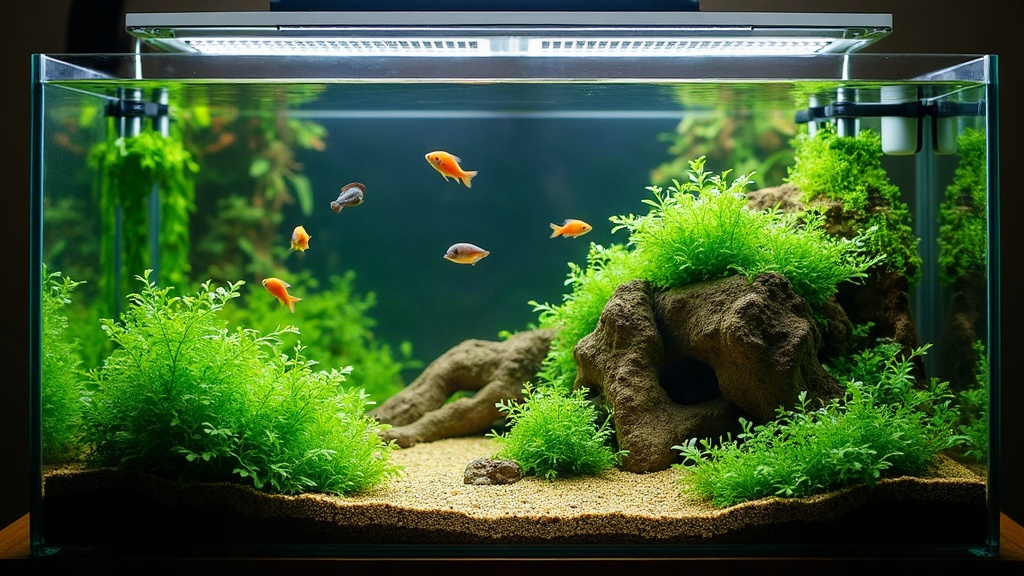
If you’re putting together a 55 gallon planted community tank, the HOB vs canister filter question isn’t just a shopping decision. It’ll shape your water flow, your maintenance Sunday routine, and honestly, how well your plants grow for years down the line. Short version: canisters usually win for planted 55s because they hold more media, push a gentler surface flow, and keep your CO2 where it belongs (in the water, not bubbling off into the air). HOBs still earn their keep though, mainly on price and sheer simplicity if your bioload is light. Let’s break down what actually fits your setup.
Why Filter Choice Matters More in Planted Tanks
A bare bottom tank doesn’t care much what filter you slap on it. A planted 55 gallon community tank does. You’ve got CO2 injection to think about, delicate stems that bruise under heavy current, and fish like tetras or rasboras that would rather not swim against a firehose all day. The filter you pick touches:
- Surface agitation – too much, and you’re literally degassing your CO2 before the plants can use it
- Flow distribution – plants want gentle, even circulation spread across the tank, not one aggressive jet blasting a corner
- Media capacity – more biological media means you can stock heavier and cycle nutrients faster
- Maintenance frequency – how often you’re actually elbow-deep in tank water on a weekend
Hang-On-Back Filters: Pros and Cons
HOB filters, think AquaClear 70 or Marineland Penguin 350, hang off the back rim. They pull water up a tube, run it through media, and dump it back via a little waterfall spillway.
Pros:
- Cheaper upfront, usually $30–$70
- Dead simple to install and clean, no hoses to wrestle with
- The splashing return oxygenates well, which helps if your community tank is stocked fairly heavy
- Media swaps take ten seconds: lift the cartridge or basket, drop in the new one
Cons:
- That same splashing agitation knocks CO2 out of solution faster. If you’re dosing CO2 for a carpet or fussy stems, this works against you
- Media volume is limited next to what a canister holds
- Water level has to sit close to the rim, so you lose flexibility if you run your tank fill line low
- Flow comes from one output point, and in a 48-inch-long 55 gallon, that’s plenty of room for dead spots to form
Canister Filters: Pros and Cons
Canisters, the Fluval 307, Eheim Classic 250, Fluval FX4, sit under or beside the tank and connect through intake and return hoses, usually ending in a spray bar or lily pipe.
Pros:
- Big media capacity, multiple trays for mechanical, biological, and chemical stages
- The spray bar or lily pipe spreads flow gently across the whole tank, which planted layouts love
- A submerged return barely disturbs the surface, so your CO2 stays put
- Quieter too, since the motor’s sealed up and often tucked away in the stand
- Scaling up bioload later just means adding media, not buying a whole new filter
Cons:
- Pricier, $100–$250 or more
- Cleaning takes more effort: hoses, O-rings, priming the whole system
- Leak risk if you skip maintenance or let an O-ring dry out
- Eats up cabinet space under the tank
Which One Fits a 55 Gallon Planted Community Tank?
Go canister if:
- You’re running CO2 or keeping finicky species like Hemianthus, Rotala, or Ludwigia
- Your bioload sits moderate to heavy (barbs, bigger tetras, bottom feeders)
- You want the option to bolt on a spray bar, lily pipe, or inline heater down the road
Go HOB if:
- You’re low-tech, no CO2, and leaning on tough plants like Anubias, Java fern, or Vallisneria
- Budget’s tight and you want maintenance that takes five minutes, not thirty
- Stocking stays light to moderate: small tetras, livebearers, maybe a handful of corydoras
A Practical Middle Ground
Plenty of seasoned planted-tank folks just run both. A canister with a spray bar handles the heavy lifting, while a small HOB or sponge filter adds surface skimming and acts as backup flow if the power blinks out or you’re mid-cleaning on the canister. For a 55 gallon, a single Fluval 307 or Eheim Classic 250 (rated for 75–100 gallons, since oversizing a bit for planted tanks is pretty standard practice) handles most community setups without breaking a sweat.
Flow Rate Guidance
Rule of thumb: aim for 4–6x tank turnover per hour in a planted community tank. For 55 gallons, that puts you in the 220–330 GPH range. Canisters let you fine-tune this with valve control, while an HOB’s flow rate is basically locked in by whatever pump came with it.
Conclusion
For a 55 gallon planted community tank, a canister filter is the better long-term bet. It keeps your CO2 in the water, spreads flow evenly, and grows with your bioload as the tank matures. That said, an HOB is still a perfectly smart, wallet-friendly choice for low-tech setups running hardy plants and lighter stocking. Match the filter to what your plants and fish actually need, not just what’s cheapest on the shelf, and you’ll end up with clearer water and plants that actually push new growth instead of limping along.