CO2 Reactor vs Ceramic Diffuser for a 200 Gallon Planted Display
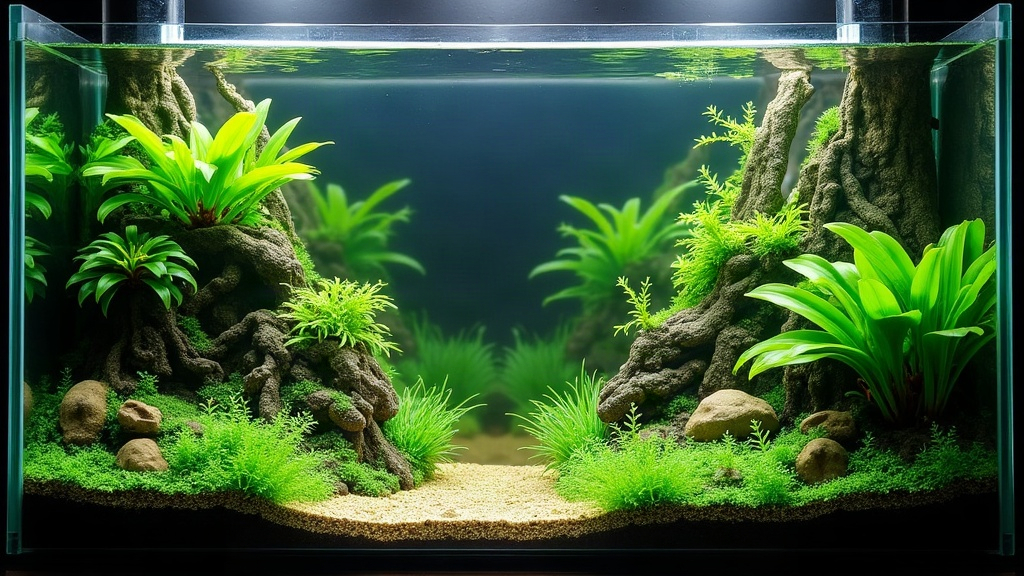
If you’re running a 200 gallon planted display, the real question isn’t whether you need CO2 injection. It’s which delivery method will actually keep pace with that much water. Short answer: an inline CO2 reactor almost always beats a ceramic diffuser at this scale. But the full picture depends on your filtration setup, your budget, and how much maintenance you’re willing to put up with.
Why Scale Changes the Equation
At 20 or 40 gallons, a ceramic diffuser dropped into the tank does the job just fine. The surface area-to-volume ratio is forgiving, and a handful of bubbles per second will dissolve long before they hit the surface. A 200 gallon tank is a different animal. You’ve got a much bigger water column, often several return points feeding the tank, and plant biomass that can run 3-5 times denser than what you’d see in a smaller setup. That diffuser that worked beautifully in your old 55 gallon tank? It simply can’t pump in enough CO2 fast enough to hold a stable 25-30 ppm across that kind of volume.
How Each Method Actually Works
Ceramic Diffuser
A ceramic diffuser pushes CO2 through a fritted disc, breaking it into fine micro-bubbles that rise and slowly dissolve along the way. Under good conditions (strong flow across the disc, a high bubble count, minimal turbulence) dissolution efficiency lands somewhere around 70-85%.
Pros:
- Cheap, usually $15-40 per unit
- Simple to install, no plumbing involved
- Easy to clean (a soak in diluted bleach or vinegar does it)
Cons:
- Efficiency falls off fast in high-flow or turbulent tanks
- You’ll often need 2-3 units just to inject enough CO2 for 200 gallons
- Bubble clouds can look messy in a display tank
- Biofilm clogs the disc over time, making bubbles coarser
Inline CO2 Reactor
An inline reactor sits in the return line of your canister filter, or runs as a standalone unit fed by its own pump. Inside, water and CO2 mix in a chamber (sometimes packed with bio-balls, sometimes using a spin mechanism or a counter-current path) which forces near-complete dissolution before the water flows back into the tank. We’re talking 95-99% efficiency, with no visible bubbles reaching the display at all.
Pros:
- Handles high CO2 demand without needing a cluster of units
- No bubbles floating through the display, cleaner look overall
- Scales with flow rate. Larger models (GLA XL, Rhinox CO2 Reactor, for example) are built specifically for 150-300+ gallon systems
- Dissolution stays stable and predictable even when CO2 output fluctuates a bit
Cons:
- Costs more upfront, typically $80-250 depending on size and brand
- Needs to be plumbed into your canister filter’s return line
- Adds a bit of flow restriction
- Needs occasional internal cleaning if debris builds up in the media
Real-World Numbers for a 200 Gallon Tank
Say you’re running a heavily planted 200 gallon display and aiming for 25-30 ppm CO2:
-
Ceramic diffuser approach: Plan on 2-3 diffusers, each running 3-4 bubbles per second, fed by a high-pressure regulator and likely a large CO2 cylinder (5+ lb tank recommended). Even with all that, plenty of aquarists still report pH swings and uneven distribution, especially down near the substrate.
-
Inline reactor approach: One properly sized reactor (rated for 1,000+ GPH) paired with a canister filter pushing 800-1,200 GPH usually delivers stable, even CO2 distribution across the whole tank, without the constant bubble-counting guesswork.
Which Should You Choose?
Go with a ceramic diffuser if:
- Your 200 gallon setup is low-tech or only moderately planted
- Budget is your main constraint
- You don’t mind the bubble stream, or you can tuck it behind hardscape
Go with an inline CO2 reactor if:
- You’re chasing a high-tech, densely planted layout (carpeting plants, demanding stems like Rotala or Hemianthus)
- You want consistent, measurable CO2 saturation without babysitting bubble counts
- You’re already running canister filtration with solid flow (reactors need real flow to work properly)
Maintenance Considerations
Ceramic diffusers want monthly cleaning, since biofilm builds up and coarsens the bubbles, slowing dissolution. Reactors need less frequent attention, usually just a quarterly check of the media or impeller, but here’s the catch: a clog inside a reactor can choke your entire filter’s flow. That’s a much bigger headache than a clogged diffuser ever causes.
Conclusion
For a 200 gallon planted display, a CO2 reactor is the smarter, more scalable bet. It dissolves CO2 far more efficiently, saves you from running a pile of extra equipment, and keeps the display free of distracting bubble trails. Ceramic diffusers still have their place for lower-demand tanks or tighter budgets, just expect to run multiple units and live with more variability in your CO2 levels. If you’re serious about a lush, high-tech aquascape at this scale, put the money into a quality inline reactor sized for your filter’s flow rate. It pays off, both in plant health and in how the tank actually looks.