Keeping Celestial Pearl Danios Happy in a Planted 10-Gallon
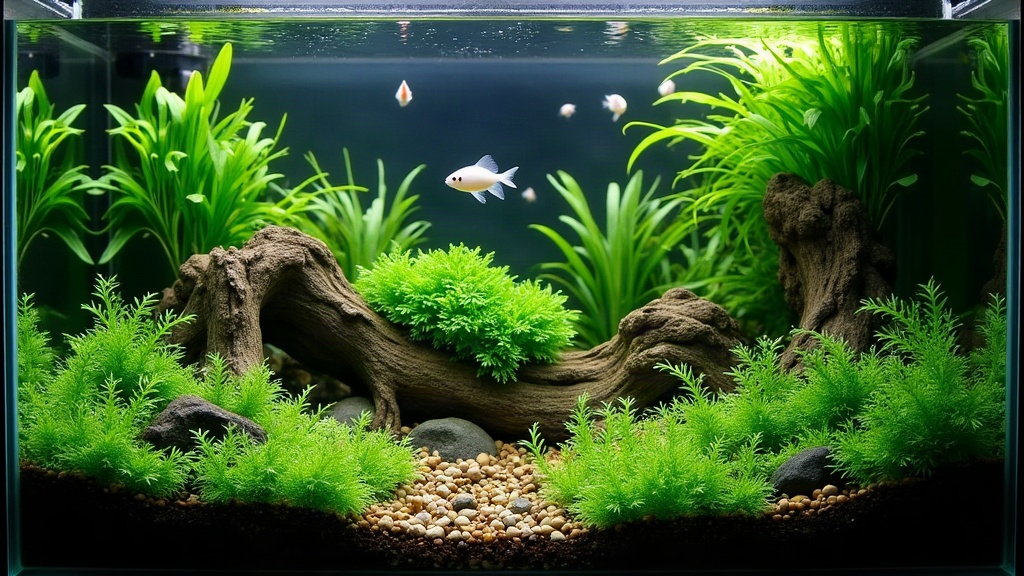
Why a Densely Planted 10-Gallon Suits Celestial Pearl Danios
Celestial pearl danios (Danio margaritatus, sold in some shops as galaxy rasboras) are tiny, jewel-toned fish that come from shallow, weedy ponds in Myanmar. In the wild they stick close to dense vegetation, picking off insects and tiny invertebrates, rarely venturing into open water. That matters more than most people assume when setting up their tank. A bare 10-gallon with wide-open swimming space actually works against them. A densely planted 10-gallon, on the other hand, mimics the cover they evolved around, and the difference in behavior shows up almost overnight.
How do you know you’ve nailed the setup? Watch for these signs:
- Males display constantly, flaring fins and chasing rivals in short bursts
- Fish hold position in open mid-to-lower water instead of pressing against the glass
- Color deepens into a rich orange-red with sharp blue-white spangles
- Feeding response is fast and confident, fish swim forward instead of scattering
Planning the Planted 10-Gallon
A 10-gallon tank (roughly 20 x 10 x 12 inches) is genuinely enough room for a small group of celestial pearl danios, as long as the planting does the heavy lifting of making them feel safe.
Plant Selection and Layout
- Background: Stem plants like Rotala rotundifolia, Ludwigia repens, or hornwort build a dense wall that breaks sightlines and gives shy fish a place to vanish into.
- Midground: Cryptocoryne wendtii or Java fern tied to driftwood fills the middle layer without demanding much light or CO2, forgiving for anyone who isn’t chasing a high-tech setup.
- Foreground/floating cover: A patch of floating plants, frogbit or salvinia work well, dims the tank slightly and recreates the shaded pond surface these fish grew up under. Dwarf hairgrass or monte carlo makes a decent low carpet if you want a cleaner front view.
- Density target: Cover roughly 60-70% of the footprint with plants, leaving just enough open water in the front third for viewing and feeding. Think jungle with a window, not a jungle with no window at all.
Substrate and Hardscape
- A nutrient-rich aquasoil (ADA Amazonia or something comparable) feeds root-growing plants without constant dosing.
- Toss in a few small pieces of spider wood or manzanita branches. They give fish natural perches and hiding spots between plant clusters, and honestly they look great too.
- Leaf litter (Indian almond or oak leaves) is optional, but it adds tannins and extra cover, and these fish clearly notice the difference.
Water Parameters
| Parameter | Target Range |
|---|---|
| Temperature | 73-78°F (23-26°C) |
| pH | 6.5-7.5 |
| GH | Soft to moderately hard |
| Ammonia/Nitrite | 0 ppm |
| Nitrate | Under 20 ppm |
Celestial pearl danios don’t handle sudden swings well. A fully cycled tank with steady weekly water changes of 20-30% counts for more here than hitting one perfect number on a test strip.
Lighting and Filtration
Go with moderate lighting, enough to grow stems but not so much you’re fighting algae every week. Floating plants help soften the intensity even further. For filtration, a sponge filter or a small hang-on-back unit with the output baffled against the glass works best. These fish come from still, plant-choked water, so skip anything that pushes a strong current through the open swimming zone. They didn’t evolve for rapids.
Feeding Celestial Pearl Danios
Their mouths are small, and in the wild their diet leans heavily on tiny live prey, so size matters just as much as what’s actually in the food:
- Baby brine shrimp (a reliable staple for bringing out color in adults)
- Microworms and vinegar eels for smaller or shier fish
- High-quality micro pellets or crushed flakes as backup
- Daphnia and finely sieved cyclops
Feed small amounts twice a day. Because the tank is so densely planted, leftover food can disappear into the foliage without you noticing, so lean toward underfeeding and judge by the fish’s bellies rather than what’s floating on the surface.
Tank Mates
Keep the community calm and roughly the same size:
- A group of 8-12 celestial pearl danios (never fewer than six, they’re shoaling fish and get visibly stressed kept alone)
- Chili rasboras or ember tetras, similar size, similar temperament
- Nerite snails or a handful of amano shrimp for cleanup duty without any predation risk
- Skip anything fast, big-mouthed, or pushy; larger danios or barbs will outcompete them for food and bully them out of the open water
Common Problems and Fixes
- Fish hiding constantly: Add more plant cover and floating plants. Open space is almost always the culprit here.
- Faded color: Check the diet first, a lack of live or frozen food is the usual suspect, then double-check water stability.
- Bullying among males: Break up sightlines with more stem plants. Overcrowded sightlines, ironically, drive most of the aggression.
- Algae on leaves despite low light: Usually a nutrient imbalance. Try a light liquid fertilizer dose and check that nitrate isn’t crashing to zero.
Conclusion
A densely planted 10-gallon isn’t just a nice-looking display for celestial pearl danios. It’s about as close to their natural pond as you can get in a glass box. Get the planting density right, keep the flow gentle, stick to a small-prey feeding routine, and these tiny fish will pay you back with bold displays, saturated color, and years of activity packed into a surprisingly small footprint.